

New Research Points to Children’s Sleep Environment as Key Modifiable Factor in Development and Family Well-Being

A child sleeping inside a sensory safety zPODS in his room
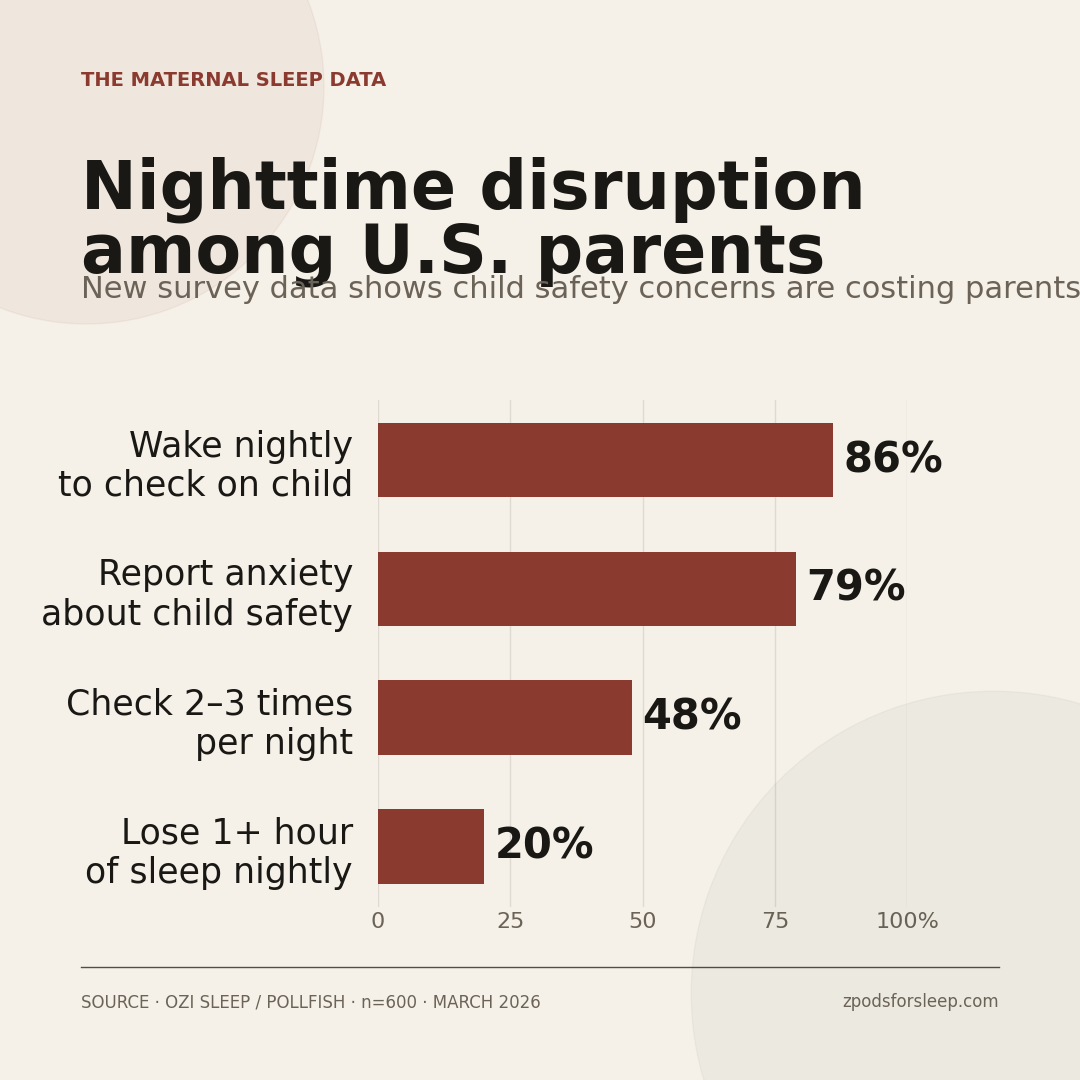
Survey Data Visualization

zPODS For Sleep-Child with ASD-200 Families Bar Graph National Survey
With 44% of U.S. children not getting adequate sleep a growing body of research identifies the sleep environment — not just sleep duration — for taking action!
ST.CHARLES, MO, UNITED STATES, September 3, 2026 /EINPresswire.com/ -- A convergence of recent research is drawing attention to the role of the sleep environment in children’s health, development, and family functioning — and to the toll that inadequate sleep takes on both children and the parents who care for them.According to the 2026 Sleep in America Poll published by the National Sleep Foundation, approximately 44% of U.S. children do not consistently get the recommended amount of sleep for their age. The survey also found that parents frequently underestimate how much sleep their children need by more than an hour per day. Separately, a March 2026 data brief from the CDC’s National Center for Health Statistics examined sleep routines and daytime tiredness among children ages 2–17, documenting patterns of inadequate rest across age groups, disability status, and income levels.
Research published in The Lancet Child & Adolescent Health found that children who get fewer than nine hours of sleep per night show measurable differences in brain regions responsible for memory, intelligence, and emotional regulation compared to children meeting sleep guidelines. Those differences were associated with increased rates of depression, anxiety, impulsive behavior, and difficulties with problem-solving and decision-making — and persisted at a two-year follow-up.
The Caregiver Side of the Equation
The consequences of children’s sleep problems extend directly to the adults in the household. A systematic review published in Current Sleep Medicine Reports found that up to 76% of family caregivers reported poor sleep quality, with measures indicating short sleep duration and frequent night awakenings. The review identified caregiver sleep disturbance as an under-recognized and undertreated health concern.
The Sleep Foundation has noted that caregiver sleep deprivation is associated with reduced positive parenting — including decreased warmth and responsiveness toward children — particularly in the hour before bedtime. Research has also linked poor parental sleep quality to a 2.5-times increase in depressive symptoms.
For families of children with autism and neurodevelopmental conditions, the challenge is amplified. A 2026 survey of 200 U.S. families conducted through Pollfish found that 92% of parents of children with autism report at least one significant sleep issue, 77.5% describe chronic exhaustion, and nearly 70% wake every night or several times per week to assist their child.
The Sleep Environment as a Modifiable Factor
A growing body of research identifies the physical sleep environment as a point of intervention. A 2026 systematic review in Clocks and Sleep described sleep as both a developmental process and a modifiable factor shaped by environmental conditions, including light exposure and psychosocial stress. An editorial in Sleep Medicine: X argued that establishing a “nurturing micro-sleep environment” may positively influence children’s overall development.
In 2025, the Journal of Applied Research in Intellectual Disabilities published the first peer-reviewed evaluation of enclosed sensory safety beds for children with neurodisabilities. The study of 225 caregivers found statistically significant improvements in children’s sleep duration — a median increase from 4–6 hours to 8–10 hours per night — along with reductions in self-injurious behaviors, minor injuries, and elopement incidents. The researchers noted that tools such as controlled lighting, soothing sounds, and physical enclosure had shown benefits in prior literature.
An Emerging Product Category
Gary Kellmann, co-founder of zPods for Sleep, a Saint Charles, Missouri-based company that manufactures enclosed sensory sleep environments, says the research reflects what families have been reporting to the company for years.
“The conversation about children’s sleep has focused heavily on duration — how many hours a child sleeps,” said Kellmann. “What the research is now showing is that the environment in which a child sleeps matters just as much. Every child deserves a safe place to sleep. And every parent deserves to rest.”
Kellmann, who developed the company’s first product after his own son experienced persistent nighttime fears from age 3 to 7, says the fastest-growing segment of the company’s customer base is families of children with autism, sensory processing differences, and anxiety disorders.
“For many of these families, the bedroom itself is part of the problem — too open, too bright, too unpredictable,” said Kellmann. “When you change the environment, you change the child’s ability to feel safe. And when the child sleeps, the parent can finally rest too.”
About zPods for Sleep
zPods for Sleep is a health technology company based in Saint Charles, Missouri, focused on specialized sleep environments for individuals with autism and sensory processing differences. The company’s enclosed sensory sleep pods feature circadian LED lighting, surround soundscape audio, and a pod-style design available through DME and healthcare channels and directly to families. Its subsidiary, OZI Sleep (ozisleep.com), develops contactless sleep monitoring technology. More information is available at zpodsforsleep.com.
Peter Nicastro
zPODS Holdings
+1 314-635-0817
email us here
Visit us on social media:
Instagram
Facebook
YouTube
TikTok
How zPODS helps Moms get more Sleep
Legal Disclaimer:
EIN Presswire provides this news content "as is" without warranty of any kind. We do not accept any responsibility or liability for the accuracy, content, images, videos, licenses, completeness, legality, or reliability of the information contained in this article. If you have any complaints or copyright issues related to this article, kindly contact the author above.
